The AI Art Debate Is More Complicated Than We Admit
Sun The Pun
There has been a lot of outrage lately around AI-generated images.
And yes, before anything else, let me be very clear: some concern is absolutely valid. But what I feel strongly is that we've crossed the line from healthy concern into over-concern - and that's where the real problem starts.
Over-concern doesn't help artists.
Over-concern doesn't help writers.
And over-concern definitely doesn't help people who are just trying to create something with limited resources.
We Already Use AI Everywhere - We Just Don't Like Admitting It
Let's start with something uncomfortable but true.
Almost everyone today uses AI assistance in writing.
Grammar checking.
Sentence restructuring.
Brainstorming.
Rewriting awkward paragraphs.
Even people who loudly criticize AI will quietly use it and never mention it. And we don't call that dangerous. We don't say writing itself has lost value because AI helped with phrasing.
Why?
Because imagination still comes from the human.
AI doesn't give you your story. It doesn't give you your ideas. It doesn't give you your emotions. It just helps you express them better or faster.
Now suddenly, when it comes to images, people treat AI like it's the end of creativity itself. That inconsistency matters.
The One Artist Concern That Is 100% Valid
Let's not dodge the real issue.
The strongest and most valid criticism of AI image generation is this:
AI models were trained on copyrighted images, often without the artists' consent.
Yes.
That is concerning.
And that concern is completely justified.
If your art was used to train a system without your permission, it will feel like exploitation. Artists are not wrong for feeling angry about this.
However - and this is where nuance is required - this does not automatically mean every AI-generated image is copyright infringement.
Those are two different arguments, and they often get mixed together.
AI Does Not "Store" Images - It Generalizes Patterns
AI does not function like a Google image folder.
It does not pull an existing image and remix it pixel by pixel.
It learns patterns, not files.
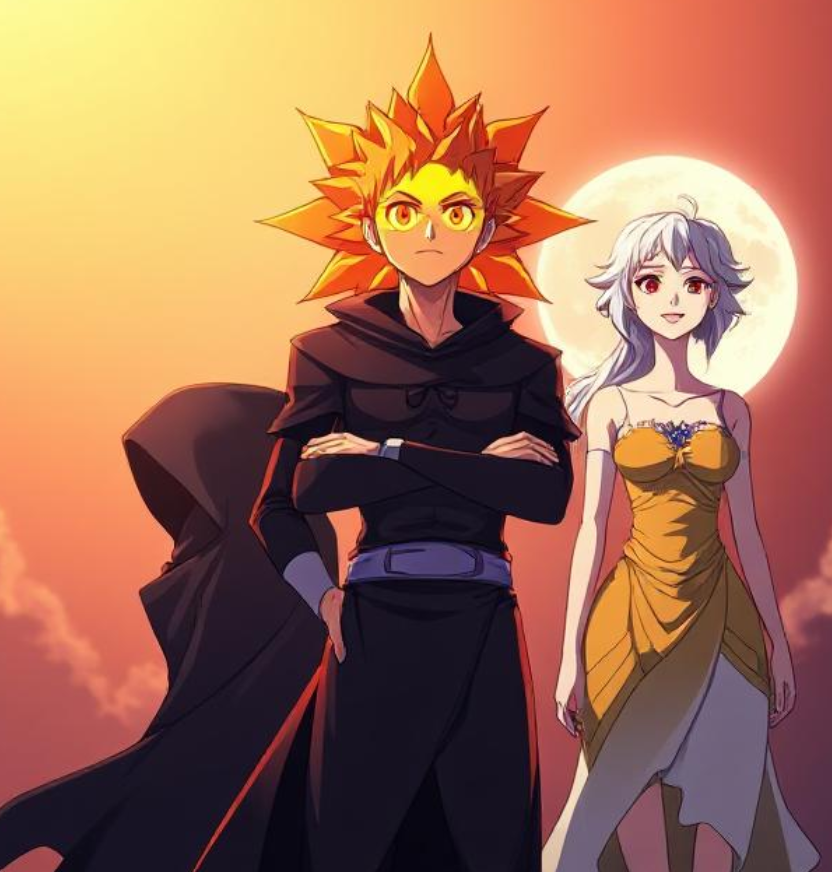
I tested this myself. I tried generating an image of a very well-known anime ninja character from a major franchise using DeepAI. If AI were truly copying copyrighted art directly, it should have produced something very close to the original design.
It didn't.
The image was inspired at best - different face, different proportions, different details. Clearly not a reproduction.
This shows something important:
AI outputs are combinations of learned traits
Exact replication is extremely rare
The more advanced the model, the more generalized the output
So yes, resemblance can happen - but exact copying is not the norm.
Prompt Quality Matters More Than People Admit
Here's something many people conveniently ignore:
If your prompt is generic, your output will be generic.
If your prompt is vague, your output will resemble common tropes and popular styles.
That increases the risk of similarity.
But the more specific and unique your prompt is - the more preferences, constraints, and details you add - the more unique the generated image becomes.
Is copyright risk ever zero? No.
But it decreases significantly with effort.
That responsibility lies with the user, not the tool itself.
"Support Artists" Sounds Nice - But It Ignores Reality
This is where the debate becomes disconnected from real life.
I often hear:
"You should support artists instead of using AI."
That sounds morally correct - until you apply it to actual situations.
If you're a bestselling author with an active income? Sure. Hire artists. Support them. That's great.
But if you're:
An indie writer
A first-time creator
Someone with limited resources
Then what?
Hiring an artist means:
High upfront costs
Long waiting periods (weeks or months)
Limited iterations
Artistic styles that may not align with your vision
Even after all that, there's no guarantee you'll like the final result.
With AI:
You can iterate instantly
You control every change
You don't burn money experimenting
You can stop anytime
Here's the uncomfortable truth:
Most indie creators were never going to hire an artist anyway.
AI is not replacing artists for them - it's replacing nothing.
Without AI, they would:
Use stock photos
Use no cover at all
Upload on platforms like Wattpad or Royal Road where covers are optional
So claiming AI is "stealing jobs" in this context is often inaccurate.
Supporting Artists Is a Choice, Not an Obligation
Supporting artists is good.
But it is not mandatory.
People support artists when they:
Have enough money
Want a specific human style
Value that collaboration
That's a preference - not a moral law.
Ironically, many of the loudest voices demanding "support artists" are already financially comfortable. They are not the ones struggling to publish their first book or fund their first project.
That matters.
Copyright Law Is About Expression - Not Similarity
Another major misunderstanding:
Two characters looking similar does not automatically mean copyright infringement.
Even in anime, movies, and games, you'll find characters from different franchises that look extremely similar.
Copyright protects:
Specific expressions
Distinct designs
Recognizable compositions
Signature styles
It does not protect:
General ideas
Broad traits
Common aesthetics
If:
Hair color differs
Facial structure differs
Clothing differs
Expression differs
Then similarity alone is not enough.
Artists themselves combine styles all the time.
That doesn't suddenly become illegal when AI does it.
A Practical Safeguard: Reverse Image Search
If someone is genuinely worried about copyright risk, there is a simple and effective solution:
Reverse image search.
Upload your AI-generated image and check for close matches.
If something looks too similar, don't use it.
This dramatically reduces risk and shows good-faith effort.
Primary Product vs Secondary Use (This Matters)
Another overlooked distinction:
When you sell a book, you are selling the story, not the cover image.
The image is:
Promotional
Illustrative
Secondary
You are not claiming the art as your own standalone product. You are not selling the image itself.
This is similar to:
Embedding YouTube videos in articles
Using illustrative visuals to support text
The problem only arises when:
You sell AI art as art
You claim authorship of the image
You deliberately copy a known work
Using AI images as supporting material is not the same as commercial art theft.
Final Thoughts
AI image generation is not perfect.
It raises ethical questions.
Artists' concerns about training data are valid.
But the current outrage often:
Ignores economic reality
Overstates copyright risk
Applies standards unevenly
Shames people who simply lack resources
AI, for many creators, is not exploitation - it is access.
Until we find a way to fairly compensate artists without locking creativity behind wealth, AI tools will remain necessary.
Concern is good.
Discussion is good.
But over-concern helps no one.