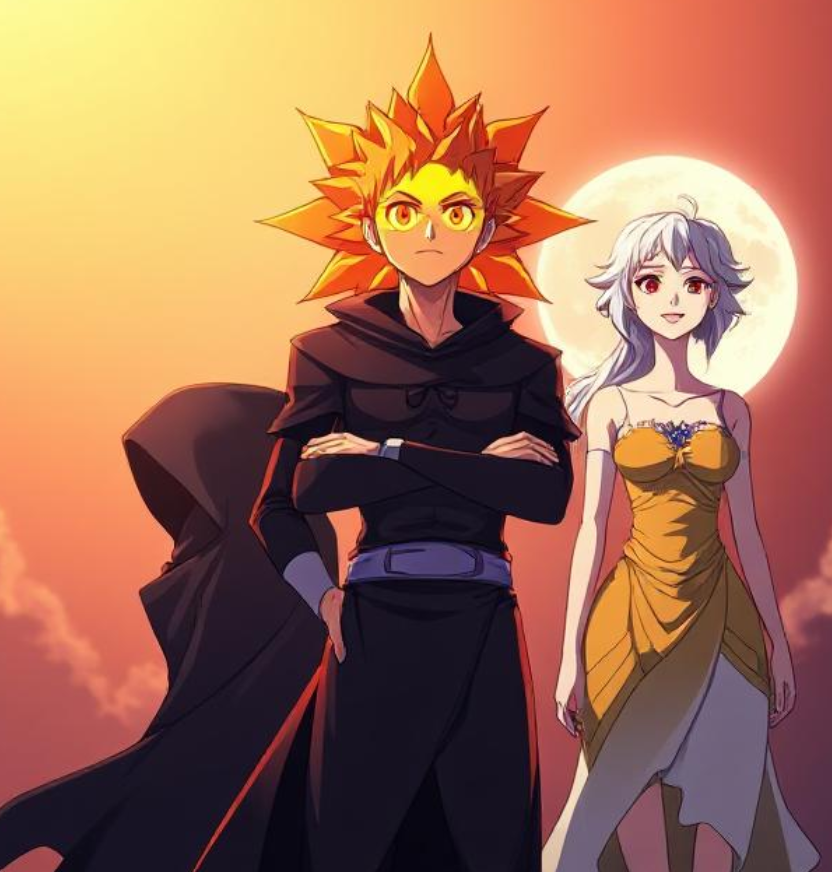
There is something deeply beautiful about the union of opposites.
Not opposites in the sense of conflict - but opposites in identity. Different races. Different ethnicities. Different languages. Different religions. When love crosses those boundaries, it feels like the purest expression of human unity. It feels like proof that connection is stronger than categorization.
In a world constantly dividing itself into labels, love that transcends those labels feels revolutionary.
Why Interracial Love Still Faces Resistance
Interracial relationships are widely legal in most parts of the world today. In the United States, for example, interracial marriage bans were struck down in 1967 through the landmark Supreme Court case Loving v. Virginia. Legally, the battle was won decades ago.
But socially? The story is more complicated.
The most common argument against interracial unions is the fear of "erasure." Some worry that if they do not marry within their race, their lineage will disappear. That their identity will dilute. That their heritage will be lost.
But biologically, that's not how lineage works.
A child inherits genes from both parents. Nothing is erased - it is combined. Lineages do not vanish; they merge. Diversity is not dilution. It is expansion.
Often the fear is less about biology and more about identity:
Fear of cultural loss
Fear of becoming a minority
Fear of community judgment
Fear of change
Social pressure, more than law, becomes the limiting factor. Families worry about what others will say. Communities fear shifts in tradition. And yet, when you see two people of different backgrounds standing together confidently, there is something undeniably powerful about it.
When two visibly different worlds meet and choose each other, it carries symbolic weight. It represents choice over conditioning.
And that matters.
The Even More Sensitive Frontier: Interfaith Love
If interracial relationships were once controversial, interfaith relationships are often even more complex.
Race may be visible - religion is deeply internal. It shapes worldview, morality, community belonging, and sometimes eternal beliefs. For many, marrying outside the faith is seen not just as a personal choice, but as betrayal.
Among large religious traditions - whether within Abrahamic faiths, within Dharmic traditions, or between the two - acceptance varies widely. In some countries, interfaith marriage is protected under secular law. In others, it is restricted or burdened with legal obstacles. And even where it is legal, social backlash can be intense.
Some communities describe interfaith unions as "assimilation." But that word feels wrong when applied to love freely chosen. Assimilation implies erasure. Love, at its healthiest, does not erase - it coexists.
The Survival Argument
There is a more nuanced point worth acknowledging.
Some religions or cultural groups are numerically small and feel close to extinction. For them, encouraging marriage within the group may feel like survival. From that perspective, preserving the faith becomes a collective priority.
But survival cannot ethically depend on coercion.
If a belief system continues only because individuals are pressured, threatened, or denied choice, its strength is questionable. A tradition sustained by fear is fragile. A tradition sustained by voluntary commitment is resilient.
And when large, thriving religious communities still restrict interfaith marriage, the survival argument becomes weaker. At that point, it can start to resemble control rather than preservation.
Conversion for Marriage
One of the most troubling aspects of some interfaith marriages is forced or pressured conversion.
Belief is deeply personal. Converting solely to satisfy a marriage requirement raises serious ethical concerns. Faith chosen under pressure is not genuine faith - it is compliance.
Every adult should have:
The right to choose their partner
The right to maintain their beliefs
The right to change their beliefs freely - not under coercion
When conversion becomes a condition imposed by family or law, autonomy is compromised.
What Should Actually Be Forbidden?
In fiction, forbidden love is romantic. In reality, the only relationships that should be forbidden are those involving:
Lack of consent
Coercion or manipulation
Abuse of power (such as teacher–student dynamics)
Exploitation
Incest
Between consenting adults, the state and society should tread carefully before interfering.
Religion, while deeply meaningful to many, should not override fundamental human rights. If individuals personally choose to marry within their faith, that is their autonomy. But denying others who feel different becomes a suppression of autonomy.
Humans are not slaves to identity systems. They are agents capable of choosing their own paths.
The Pressure No One Talks About
Even in secular countries, social pressure can be overwhelming - especially in rural or tightly knit communities. Legal permission does not guarantee social safety.
There are couples who face threats, ostracization, or family abandonment simply for loving someone from a different background. Many of their stories remain untold.
Media often avoids covering such unions in fear of triggering the conservatives. Institutions protect their image. But individuals - ordinary people - see these struggles firsthand.
And those struggles deserve visibility.
Homogeneity vs. Heterogeneity
Think about storytelling.
Flat characters - those who all think the same, speak the same, and act the same - are boring. A compelling story needs diversity of personality, perspective, and tension.
Societies are no different.
A homogeneous society may feel stable, but it can also become stagnant. Progress often comes from friction - from exposure to different ideas and ways of being.
Heterogeneity does not mean chaos. It means coexistence. It means allowing differences without demanding conformity.
Interracial and interfaith relationships are, in many ways, living symbols of heterogeneity. They show that difference does not automatically mean division.
The World Is Still Divided
Acceptance of interracial marriage has grown significantly in many Western countries. Interfaith acceptance is growing too - but unevenly.
Globally, resistance remains strong in many regions due to:
Religious conservatism
Cultural preservation concerns
Political agendas
Demographic anxieties
Some societies fear declining populations. Others fear losing cultural dominance. Others frame intermarriage as betrayal.
But belief cannot ethically be imposed. You may choose to live by one conviction. Someone else may choose differently. That difference is not a threat - it is diversity.
Love as a Bridge
We continue to classify ourselves:
By race.
By language.
By religion.
By ethnicity.
Categories are useful for understanding history and identity. But when they become walls instead of descriptions, they create fear.
Love that crosses those lines does something subtle but powerful. It builds a bridge.
It says:
Identity does not have to be fragile.
Difference does not have to mean hostility.
Unity does not require sameness.
The world is not yet fully accepting of interfaith unions. Even interracial relationships, though widely legal, can still face prejudice. But social reform has always begun with individuals choosing courage over conformity.
Perhaps one day, love across boundaries will not be seen as rebellion. It will simply be seen as normal.
And when that day comes, it will not mean identities disappeared.
It will mean they learned how to coexist.