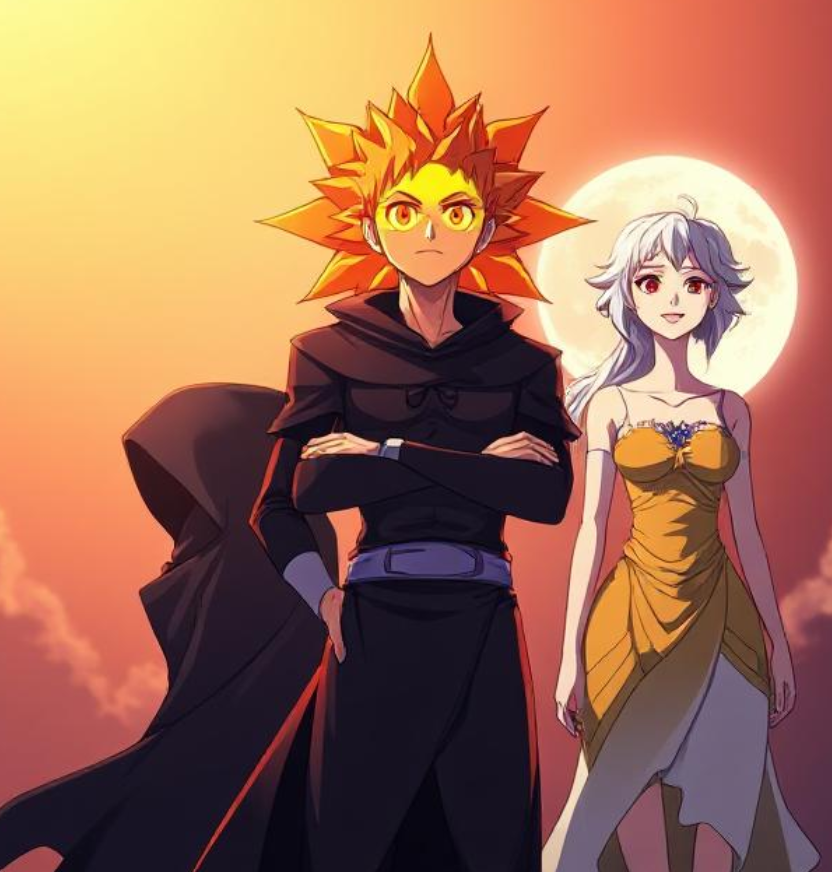
Everything Is Gray: On Heroes, Villains, Ego, and the Nature of Controversy
Sun The Pun
Our minds are complex. Human beings are complex. And because of that, there is rarely anything purely “good” or purely “bad” about us.
When we judge someone as a hero or a villain, what are we really doing? We’re measuring how much their “good” dominates their “bad” — according to our standards. That’s the key: according to our standards.
Subjectively, there is no inherent hero or villain. If you were writing a story, maybe you could design a perfect hero. But in real life? A flawless hero is almost impossible. The people we call heroes are simply people who align with our values, our principles, our emotional preferences.
And the same person someone sees as a villain could be a hero to someone else — or even neutral to a third person. That’s the complexity.
The Gray Nature of Human Beings
Everything falls under a gray area.
We all have good sides.
We all have darker sides.
Light and darkness exist together — inside us and outside us.
We aren’t homogeneous beings with one-sided thinking. We are full of contradictions. We feel pride and shame. We can respect someone and dislike them at the same time. We admire one aspect of a person while hating another.
Sometimes we don’t even want to see the bad parts of someone we like. Other times, we refuse to see the good parts of someone we hate.
That doesn’t necessarily make us bad people. It makes us human.
Our minds are full of diverse emotions — happiness, anger, excitement, sadness — reacting constantly to different scenarios. We are not stable, singular emotional machines. We are dynamic.
Separating the Deeds from the Person
It sounds easy to say:
“Separate the talent from the wrongdoing.”
“Separate the good deeds from the bad deeds.”
In reality, it’s much harder.
It takes emotional maturity. It takes ego control. And even mature people struggle with it.
When we’re young, our emotions dominate. Even later in life, our ego can override reason. If we strongly believe something, it becomes very difficult to hear nuance. Even if someone presents both positive and negative aspects, we may dismiss them entirely.
Dismissal is often seen as rudeness. But sometimes it’s defense.
When someone challenges our beliefs, they challenge our identity. They challenge our loyalty. They challenge what we’ve emotionally invested in. So we protect it.
That protection mechanism? That’s ego.
And ego doesn’t like nuance.
Bias Is Natural — And Almost Necessary
Humans are wired to pick sides.
Even in something as simple as a sports tournament, we feel compelled to support one side. Without choosing a side, the excitement fades. Engagement requires alignment.
Bias is not rare. It’s natural.
The problem isn’t bias itself. The problem is whether we allow bias to become blindness.
You can prefer someone while acknowledging their flaws.
You can dislike someone while admitting their strengths.
That’s healthy.
What becomes dangerous is violently refusing to hear the other side at all.
Controversy Is Inevitable
Controversy exists everywhere — not just in scandals, but even in everyday disagreements.
If you disagree with someone, there is tension. That tension is a small-scale controversy. And that’s normal.
In fact, if you try to avoid all controversy just to please everyone, you’re not being yourself. Having opinions naturally creates friction. A little controversy is often a sign that you are authentic.
But there are levels.
There’s healthy controversy — expressing your honest opinion about a controversial figure, explaining why you like or dislike them.
Then there’s toxic provocation — intentionally triggering people just to get reactions.
And beyond that, there’s becoming a polarizing figure.
The Risk of Being Polarizing
Being polarizing means having strong supporters and strong haters at the same time.
It’s like firing a powerful shotgun — the louder the impact, the stronger the recoil. The fame you gain is matched by the backlash you receive.
Polarization isn’t inherently evil. But it’s risky. It demands emotional resilience. It invites extreme reactions.
Moderate controversy is balance.
Extreme polarization is volatility.
If you don’t have the emotional capacity to handle intense hate alongside praise, being polarizing can damage your peace.
So maybe the ideal is not to be silent — and not to be provocatively extreme — but to exist somewhere in between.
Supporting Controversial Figures
There’s another important line to draw.
You can admire someone’s talent while condemning their crimes. You can respect a person’s achievements while rejecting their harmful actions.
But openly supporting individuals who clearly commit serious harm, crimes, or extremist acts — that’s different. That crosses into moral responsibility.
There’s a difference between appreciating skill and endorsing wrongdoing.
Nuance doesn’t mean moral chaos. It means thoughtful evaluation.
Emotions Don’t Define Your Morality
If you strongly hate someone, that doesn’t automatically make you evil.
If you strongly adore someone controversial, that doesn’t automatically make you immoral.
Emotions arise automatically. They are responses. What defines you is how you act on them.
We all struggle with emotional control. We all experience bias. We all protect our ego at times.
That’s not failure. That’s humanity.
The Core Truth: We Are Complex
Everything isn’t black and white.
Almost everything exists in shades of gray.
We are allowed to see someone as a hero.
We are allowed to see someone as a villain.
We are allowed to change our minds.
The real strength isn’t becoming emotionless.
It’s becoming aware of our emotions — and choosing how to respond to them consciously.
You don’t need to eliminate controversy.
You don’t need to eliminate bias.
You don’t need to eliminate emotion.
Just don’t let them control you blindly.
Be yourself.
Don’t be intentionally provocative.
Don’t try to please everyone.
Exist in the gray — honestly.
That’s where real dialogue begins.