From Daydreams to Digital Worlds: How I Use AI to Build Stories from Imagination
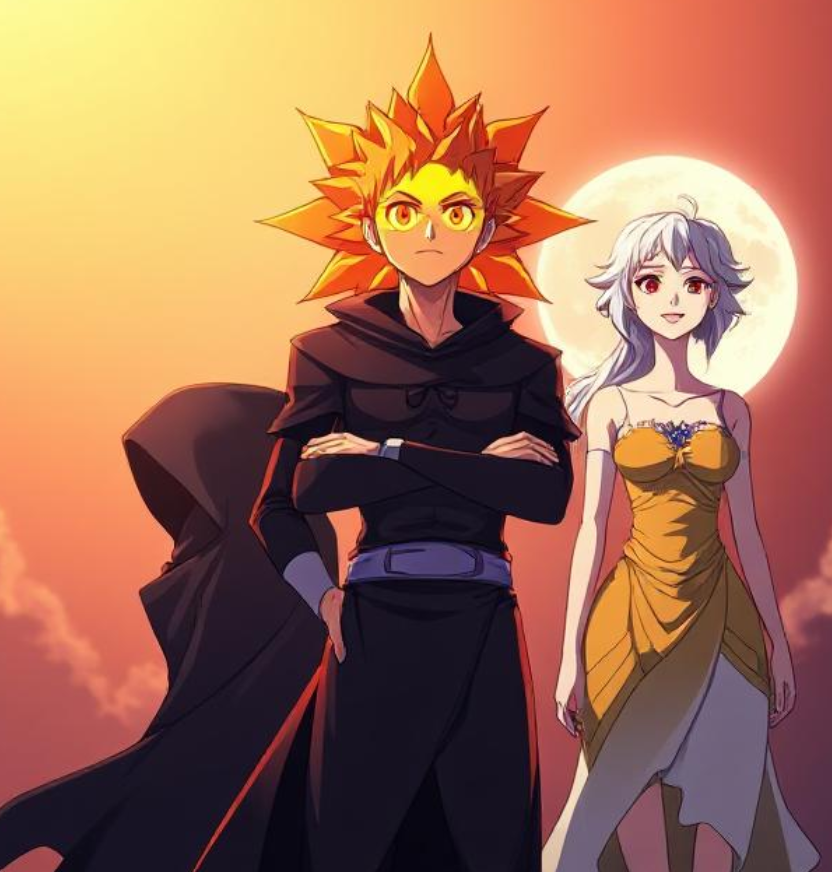
Sun The Pun
So, here’s the truth: anyone can technically generate stories using AI — but imagination is what truly brings them to life. Without imagination, AI is just a tool, not a creator.
Where It All Began
I’ve always had an active imagination. As a kid, it was my built-in boredom buster. I didn’t realize it back then, but that spark was constantly shaping how I saw the world.
As I grew older, that spark grew too — especially after discovering shows like Super Sentai, Kamen Rider, and countless anime (as mentioned in previous article). That’s when my love for world-building really kicked in. I began creating my own universes, complete with characters, arcs, and themes — sometimes entire storylines spanning 20 episodes or more.
It was exciting… until it wasn’t.
After dozens of episodes, my creative momentum started to stall. Not because my imagination ran out, but because the process became too heavy to handle alone. That’s when AI entered the story.
AI as a Creative Partner
When I first started using ChatGPT, I didn’t expect much. I just wanted help getting my ideas out so that I can enjoy reading a well-structured version of my imagination. Yes, my original goal was to satisfy myself with the raw drafts so that I can get a real feel of my imaginations which AI ironically made possible. That makes me debate that AI generated stories brings the feel better than I can. I bring imaginations which AI can’t. It’s balance.
So, I started feeding it everything I imagined, and it would produce readable drafts for my enjoyment.
What I realized was powerful: AI could give structure to my chaos. I didn’t have to start from scratch every time — I could focus on refining and expanding instead. Plus, it became more fun than writing everything myself and giving up midway due to lack of motivation.
Of course, there are limits. ChatGPT can only remember so much — roughly 10,000 words before it starts forgetting details. But if you’re truly passionate, that’s not a deal-breaker. You just need to keep track of key events and remind the AI of them as you go. It’s like maintaining a living, breathing story bible.
How I Create (Without Planning)
Here’s the fun part: I don’t plan.
I don’t write outlines or detailed character sheets before starting. I just dive in, letting my imagination guide me wherever it wants to go. I don’t chase trends, either — I only write stories that feel right to me.
Usually, I start with a small spark — an idea, a feeling, a scene — and I build from there. As the story grows, I discover new characters, subplots, and emotional beats along the way. Sometimes I even surprise myself with what my imagination comes up with in real time.
AI helps me shape that chaos into something readable, structured, and engaging. Together, we find a rhythm — like co-writing with a patient, infinitely available creative partner except I am the authority.
My Secret: Heavy Prompting
If there’s one trick, I feel it’s heavy prompting.
I don’t just type “write a story about a hero.” I feed the AI detailed context focusing heavily on plot directions. The more detail I give, the more it aligns with my vision.
This lets me:
Draft faster than writing from scratch
Keep characters consistent
Test different plot directions instantly
Handle complex series or sequels without losing track
For example, when working on the sequel to Celestic Warriors: The Origins, AI helped me maintain continuity across chapters — something that would’ve been exhausting to track manually.
The Takeaway
AI doesn’t replace imagination — it amplifies it.
My ideas always come first. AI just helps me bring them to life faster, cleaner, and with more consistency. For creators who lead with imagination, it’s an incredible ally.
At the end of the day, stories should be judged by how they make you feel, not by whether AI helped write them. For me, AI isn’t a shortcut — it’s a collaborator. It turns raw imagination into something polished, tangible, and alive.
So yes — it’s absolutely possible to create deep, engaging stories this way. All you need is imagination… and the courage to let it run wild.