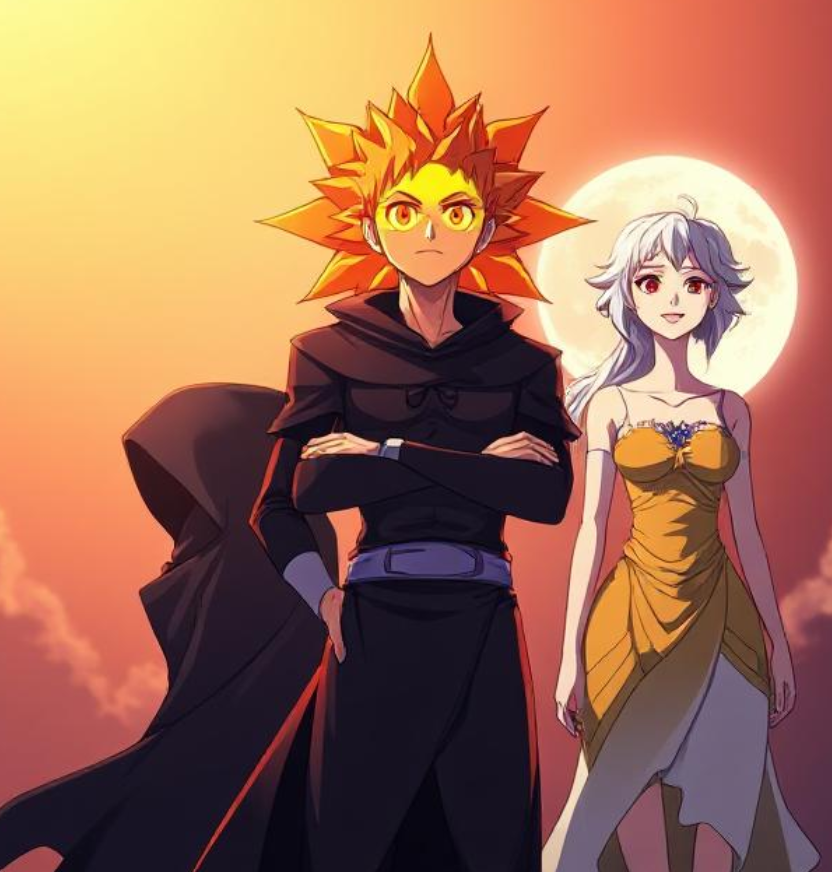
The Theory Of Balance: Sun The Pun's Take On Equilibrium In Storytelling
Sun The Pun
In this article, I've decided to introduce a concept I call my theory of balance.
Now, you might be thinking: "We all know about balance. What's new here?" After all, most of us have heard the word "equilibrium" in our physics or chemistry classes.
But I'm not talking about molecules, forces, or formulas. My version of balance is something different-something that exists in storytelling, in anime, in movies, and even in the way we think about and relationships.
Balance Beyond Science
Balance, in my view, is not just a scientific concept. It's one of the most powerful themes in stories, especially in fantasy and anime. Even outside fantasy, many narratives thrive on balance-often represented through opposites.
Hero vs. villain.
Light vs. dark.
Hope vs. despair.
This tension between extremes creates the kind of balance that fuels both conflict and resolution.
But my idea of balance isn't just about throwing opposites together. It's about how they interact without losing themselves.
The Problem With "Change"
Many tropes-especially in romance or enemies-to-lovers stories-suggest that one character changes the other. We see this often in fiction: the cold-hearted villain becomes kind because of the hero's love, or the shy character suddenly transforms into a confident leader overnight.
But here's my argument:
In real life, people don't change so easily. Personalities don't flip like switches. Trauma, experiences, or growth can influence someone, sure-but the core personality stays intact.
So when stories force characters to "change" for each other, it feels unrealistic. Worse, it strips characters of the traits that made them memorable in the first place.
Instead of change, I believe in coordination. Two different people, even opposites, can learn to respect, trust, and balance each other without sacrificing who they are.
What Balance Really Means
In my theory:
Balance is not about making characters the same.
It's not about changing each other's personality.
It's about maintaining individuality while building mutual respect and trust.
Characters may share one similarity (say, loneliness), but their ways of thinking, acting, and living can remain different-even opposite.
That's where balance shines.
Think of it like this:
If one destroys, the other restores.
If one doubts, the other believes.
If one pushes forward, the other holds steady.
It's a cycle, not a transformation. And it's far more authentic than rewriting a character's soul.
Why Writers Should Care
As writers, we are like gods of our own worlds. We decide how characters act, what conflicts they face, and how they grow. But too often, writers chase trends, forcing characters into molds just to please readers.
My advice: don't chase reads-chase truth.
Write what feels right to you. Explore personalities and opposites that matter to you. Even if your idea isn't new or groundbreaking, it's still valid because it's yours.
Readers don't remember characters because they "changed." They remember them because of who they were-the stubborn, the bold, the quiet, the flawed. True balance means preserving that essence while showing how relationships evolve through coordination, trust, and respect.
Final Thoughts
The theory of balance is my way of rethinking relationships in fiction.
Instead of forcing change, focus on harmony. Instead of sameness, embrace opposites.
Balance is not about losing yourself-it's about finding stability with others while staying true to who you are.
That's the kind of storytelling I believe in, and it's the foundation of many of my own works, from Celestic Warriors: The Origins to Elemental Wars.